The Ten Wings: How Confucius Gave the iChing Its Voice
An overview of the Ten Wings and how they transformed the iChing into a lasting philosophical framework.
By Fang Zhang
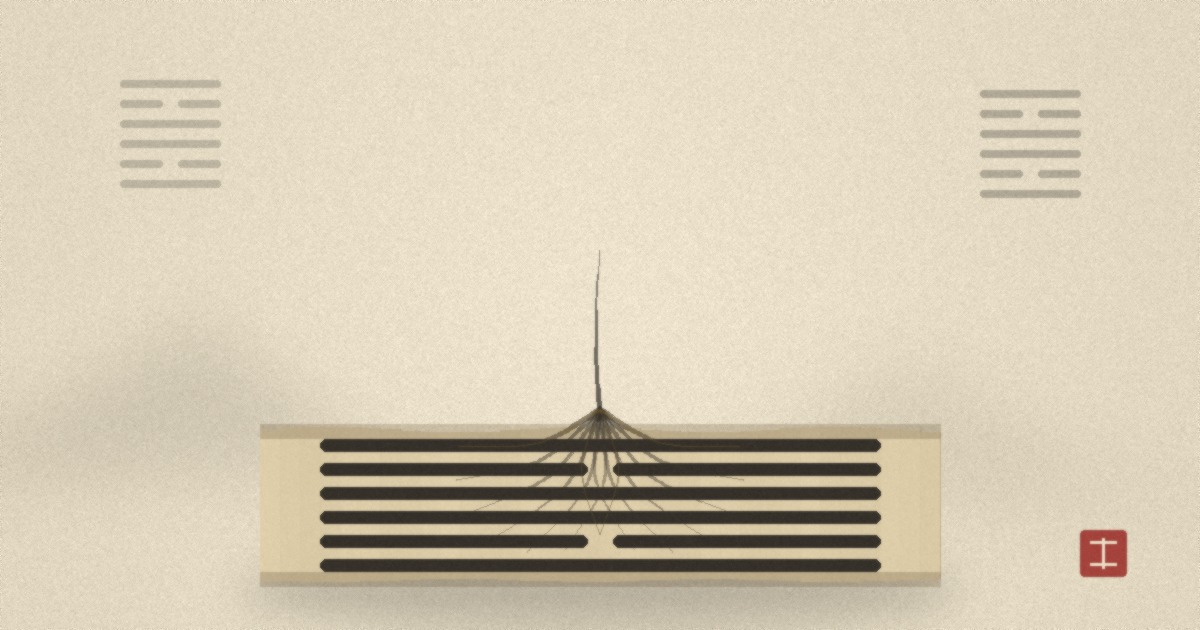
The iChing (易经) began as a divination manual — 64 hexagrams built from broken and unbroken lines, used to answer yes-or-no questions about harvests, wars, and marriages. On its own, it’s cryptic: terse line judgments, no explanation, no philosophy. What turned it into one of the most profound texts in Chinese thought is a set of commentaries known as the Ten Wings (十翼).
Traditionally attributed to Confucius, the Ten Wings are:
- Tuan Zhuan (彖传), Parts I & II — Commentary on the overall meaning of each hexagram’s judgment.
- Xiang Zhuan (象传), Parts I & II — Commentary on the “Image” — the symbolic meaning of each hexagram and its individual lines.
- Xici Zhuan (系辞传), Parts I & II — The “Great Commentary” or “Appended Judgments” — the philosophical core, exploring cosmology, change, and how the sage uses the iChing to understand the world.
- Wenyan Zhuan (文言传) — A detailed commentary specifically on the first two hexagrams, Qian (乾) and Kun (坤), seen as the foundational yin-yang pair.
- Shuogua Zhuan (说卦传) — Explains the trigrams (八卦) and their symbolic associations (family roles, directions, animals, body parts, etc.).
- Xugua Zhuan (序卦传) — Explains the logical sequence of the 64 hexagrams — why one follows another.
- Zagua Zhuan (杂卦传) — Pairs hexagrams by contrast or similarity in brief, aphoristic lines.
Together, these ten texts transformed the iChing from a divination tool into a philosophical system — one that speaks to change, balance, and the relationship between human action and the natural order. This is the layer that gave rise to concepts later absorbed into Taoism and Confucian ethics alike: the idea that a wise person doesn’t fight change, but reads its pattern and moves with it.
For anyone studying the iChing seriously, the Ten Wings aren’t optional — they’re the difference between throwing coins for fortune-telling and engaging with one of the oldest systems of thought about how the world actually works.